Health complaints in elderly are linked to prolonged screen exposure
Sleep Disturbance & Insomnia
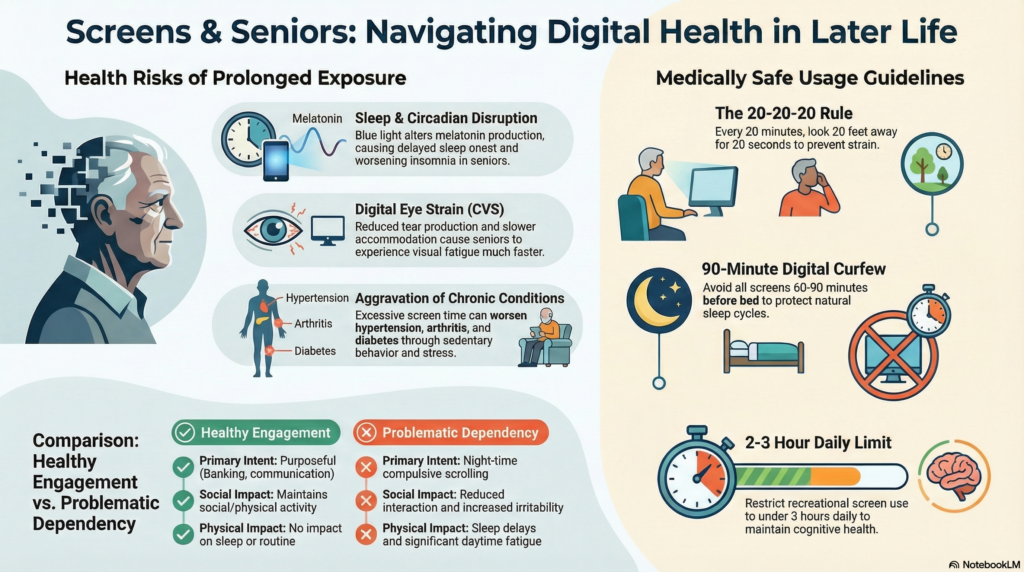
Prolonged screen exposure in the elderly is closely linked to sleep disturbances and insomnia. Studies have shown that using screens before sleep can lead to poorer sleep quality and insomnia symptoms. This is particularly true for older adults, as bedtime digital media use increases the risk of insomnia more significantly in this age group. The blue light emitted from screens can alter the circadian rhythm, leading to delayed sleep onset, fragmented sleep, early morning awakenings, daytime fatigue, and worsening of pre-existing insomnia.
Eye Strain & Visual Fatigue (Digital Eye Strain / CVS)
Elderly individuals are also prone to eye strain and visual fatigue, commonly known as Computer Vision Syndrome (CVS). Vision impairment in older adults is strongly associated with cognitive decline. Symptoms such as dry eyes, burning sensations, headaches, blurred vision, and increased glare sensitivity are more pronounced in the elderly due to reduced tear production, slower accommodation, early cataracts, and reduced contrast sensitivity. Prolonged near-focus screen use can lead to visual fatigue much faster in older adults compared to younger populations.
Cognitive Slowing & Fatigue
Excessive screen use can also contribute to cognitive slowing and fatigue in the elderly. Insomnia and poor sleep are associated with cognitive changes in older adults, and the blue light from screens can further alter brain stimulation. This can lead to impaired executive function, attention, and processing speed, especially in seniors with mild cognitive impairment, early dementia, or depression. Sleep fragmentation can accelerate cognitive symptoms, making it crucial to manage screen time effectively.
How does screen time physiologically impact seniors differently from younger adults?
Screen time impacts seniors differently from younger adults due to changes in three major systems: the circadian system, the visual system, and neurocognitive processing. Aging reduces melatonin production, weakens circadian amplitude, and decreases adaptability to light shifts, making even small circadian disruptions from late-night mobile use have larger sleep consequences. The visual system is affected by lens opacity, reduced pupil diameter, slower accommodation, and reduced tear film, leading to faster visual fatigue, strain, and headaches. Neurocognitive processing in older brains is slower, with reduced cognitive reserve and greater vulnerability to sleep loss, amplifying attention problems, memory complaints, and irritability with excessive screen use.
Does excessive screen use aggravate common elderly conditions?
Yes, excessive screen use can aggravate common elderly conditions both indirectly and physiologically. For instance, increased sedentary time and reduced outdoor light exposure from screen use can worsen diabetes by leading to poor sleep and insulin resistance. Hypertension can be exacerbated by night-time sympathetic activation from light exposure and poor sleep, leading to increased morning blood pressure surges and cardiovascular risk. Arthritis can worsen due to prolonged sitting, joint stiffness, reduced mobility, and neck flexion posture. Insomnia, which is very common in the elderly, can be significantly impacted by screen use, with bedtime scrolling often linked to delayed sleep onset.
Healthy Digital Engagement vs Problematic Screen Dependency
Healthy digital engagement involves purposeful use of screens for activities like banking, communication, and reading, with voluntary stopping, no impact on sleep, maintenance of daily routines, and physical activity. Problematic screen dependency, on the other hand, includes night-time compulsive scrolling, irritability when unable to access the phone, sleep delays due to content consumption, reduced social and physical interaction, and increased daytime fatigue
Medically Safe Screen-Time Recommendations for Seniors
Based on sleep and geriatric literature, practical guidelines for medically safe screen-time for seniors include limiting total daily recreational screen time to preferably less than 2-3 hours (excluding necessary communication), avoiding screens 60-90 minutes before bedtime, enabling blue light filters after 6 pm, following the 20-20-20 rule (every 20 minutes, look 20 feet away for 20 seconds), taking mandatory movement breaks every 30-45 minutes, ensuring bright daytime light exposure for at least 30 minutes in the morning, and encouraging structured digital windows for those living alone.